

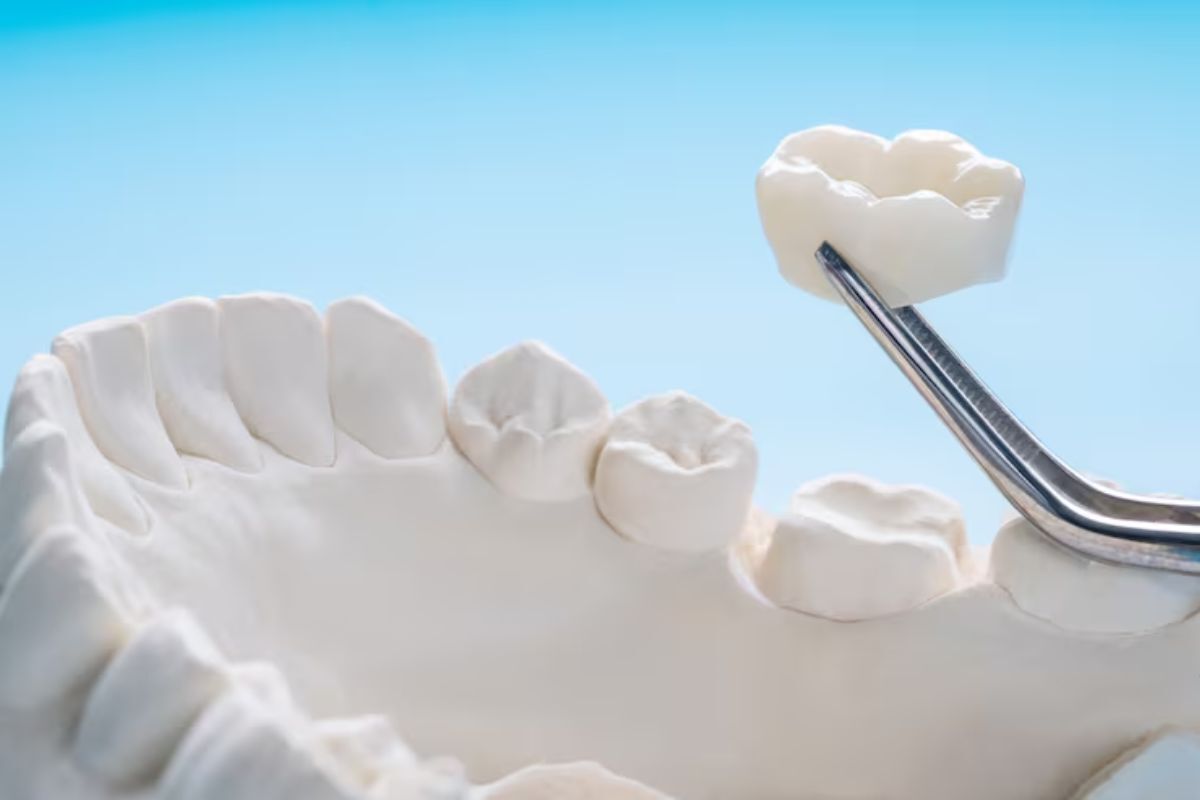
A damaged tooth does not always mean a lost tooth. In many cases, a dental crown can step in protecting what remains, restoring full function, and giving the tooth a natural appearance once again. But many patients are unsure about what crowns actually are, how they work, and whether they truly need one. This complete guide to dental crowns for damaged teeth will walk you through everything in simple, clear language—so you can feel fully prepared and confident when discussing your options with your dentist.
What Is a Dental Crown?
A dental crown is a custom-made cap that fits over a damaged or weakened tooth. It covers the entire visible portion of the tooth—right down to the gum line.
Think of it like a protective shell. It holds the tooth together, restores its original shape and size, and allows it to function normally once again.
Crowns can be made from several different materials:
- Porcelain or ceramic — the most natural-looking, ideal for front teeth
- Zirconia — very strong and natural in appearance, suitable for both front and back teeth
- Porcelain fused to metal — a combination of good strength and aesthetics
- Gold or metal alloy — highly durable, typically used for back teeth
Your dentist will recommend the most appropriate material based on the tooth’s location, the forces it handles when you bite and chew, and your personal preferences.
How Dental Crowns Work to Restore Teeth
Understanding how dental crowns work to restore teeth helps explain why they are one of the most commonly recommended restorations in modern dentistry.
When a tooth is cracked, heavily decayed, or weakened, it can no longer handle the normal forces of biting and chewing safely. A crown covers and encases the entire tooth—distributing biting forces evenly across the crown surface rather than concentrating them on the vulnerable tooth structure beneath.
Dental crowns are used every day to give damaged teeth a second chance restoring strength, function, and appearance in a way that a standard filling simply cannot achieve for more serious damage.
When Do You Need a Dental Crown?
This is the question most patients want answered clearly. Here are the most common situations where a crown is recommended:
Severe Tooth Decay
When a cavity is too large for a filling to repair reliably, a crown is the better solution. A filling placed in a heavily decayed tooth may not hold well or provide enough structural support for long-term function. A crown covers the entire tooth and protects it from further breakdown.
After Root Canal Treatment
A tooth that has undergone root canal therapy loses significant structural strength. The procedure removes the inner pulp—leaving the tooth more brittle and prone to cracking. A crown placed after root canal treatment protects the tooth and allows it to function normally for many years.
Cracked or Fractured Tooth
A cracked tooth is a serious concern. Cracks can be small and barely visible—yet cause significant pain and allow bacteria to enter the inner tooth structure. A crown holds the cracked tooth together, prevents the crack from spreading, and relieves the pain that fractures cause.
Worn Down Teeth
Teeth grinding — known as bruxism — gradually wears away the enamel surface. Over time, teeth become shorter, flatter, and increasingly sensitive. Crowns restore the original height and protect the remaining tooth structure from further wear.
Broken Cusps
A tooth with a large broken cusp — the pointed part of a back tooth — may not be suitable for a simple filling. A crown provides full coverage and fully restores the tooth’s shape, strength, and function.
Dental Implants
When a dental implant is placed to replace a missing tooth, the crown is the visible part that sits on top of the implant post. It is custom-made to match surrounding teeth in shape, size, and colour—completing the restoration.
Cosmetic Concerns
A crown is usually the best long-term solution for any heavily discoloured, strangely shaped, or aesthetically undesirable tooth where less involved treatment is insufficient.
Signs You May Need a Crown
Here is a simple overview to help you recognize when a crown might be appropriate:
| Sign or Symptom | What It May Indicate |
|---|---|
| Severe toothache or sensitivity | Deep decay or nerve involvement |
| Visible crack or fracture | Structural damage needing full coverage |
| Pain when biting or chewing | Compromised tooth structure |
| Old large filling that keeps failing | Tooth too weak for another filling |
| Tooth looks noticeably shorter | Wear from grinding needing restoration |
| Tooth is significantly darker than others | Internal damage or failed previous work |
| Tooth broken at or below the gum line | Crown needed to restore function |
If you recognize any of these signs, visiting a comprehensive dental care for a proper assessment is the right next step. Do not wait for the problem to worsen—early intervention always leads to simpler treatment.
What Happens When You Get a Crown?
The process is straightforward and typically completed over two appointments.
First Appointment
- Your dentist examines the tooth and takes X-rays
- The tooth is shaped to make room for the crown
- An impression or digital scan is taken and sent to the laboratory
- A temporary crown is placed to protect the tooth while the permanent one is being made
Second Appointment
- The permanent crown is checked carefully for fit, colour, and bite
- Small adjustments are made if needed
- The crown is permanently bonded securely onto the tooth
Both appointments are carried out under local anesthesia. Most patients find the process comfortable with only mild sensitivity in the days following.
How Long Do Dental Crowns Last?
With proper care, most dental crowns last between 10 and 15 years — and many last significantly longer. How long your crown lasts depends on the following:
- The material used
- Which tooth it is placed on
- Your daily oral hygiene habits
- Whether you grind your teeth at night
- How regularly you attend dental checkups
A well-maintained crown is a genuinely long-lasting investment in your dental health.
How to Care for Your Crown
Caring for a crown is no different from caring for natural teeth:
- Brush twice daily with a soft toothbrush and fluoride toothpaste
- Floss carefully around the crown every single day
- Avoid biting on very hard foods—ice, hard sweets, or crusty bread
- You can also consider wearing a mouthguard if you clench or grind your teeth at night.
- Have your dentist check your crown at regular appointments.
- See your dentist immediately if your crown becomes loose or sore or if you feel a change in it.
Small, consistent habits protect your crown and help it last as long as possible.
The Right Crown for the Right Tooth
Explore our dental Clinic who takes the time to assess your tooth thoroughly will always explore every option to save it before recommending any other approach. A crown is often that option—providing a reliable, long-lasting solution that preserves your natural tooth and restores your smile.
Protecting Your Smile Starts Here
Dental crowns are one of the most trusted and time-tested restorations in modern dentistry. Whether your tooth is cracked, decayed, worn, or simply in need of extra protection — a crown could be exactly what it needs to function well for many more years to come.
At Foothills Dental Group, your long-term dental health and personal comfort are always at the centre of the care they provide. Their knowledgeable and warm team is ready to assess your tooth, explain every option clearly, and help you choose the crown that will serve you best.
Book your consultation with us today and take the first step toward a stronger, healthier smile.
Frequently Asked Questions
Is getting a dental crown painful?
The procedure is carried out under local anesthesia, so you should not feel pain during treatment. Mild sensitivity or tenderness in the days afterward is normal and settles quickly on its own.
Can a crowned tooth still develop decay?
The crown itself cannot decay—but the natural tooth structure beneath it can, particularly at the gum line where the crown meets the tooth. Good daily brushing and flossing around the crown are essential.
Is a crown always needed after root canal therapy?
In most cases, yes — root canal treatment leaves a tooth more brittle and vulnerable to cracking. A crown provides the protection needed to restore full strength and function to the treated tooth.
What if my crown comes off?
Contact your dentist as soon as possible. Keep the crown in a safe place, do not chew on that side, and do not try to stick it back on by yourself. The dentist will decide if it is to be re-cemented or remade.