

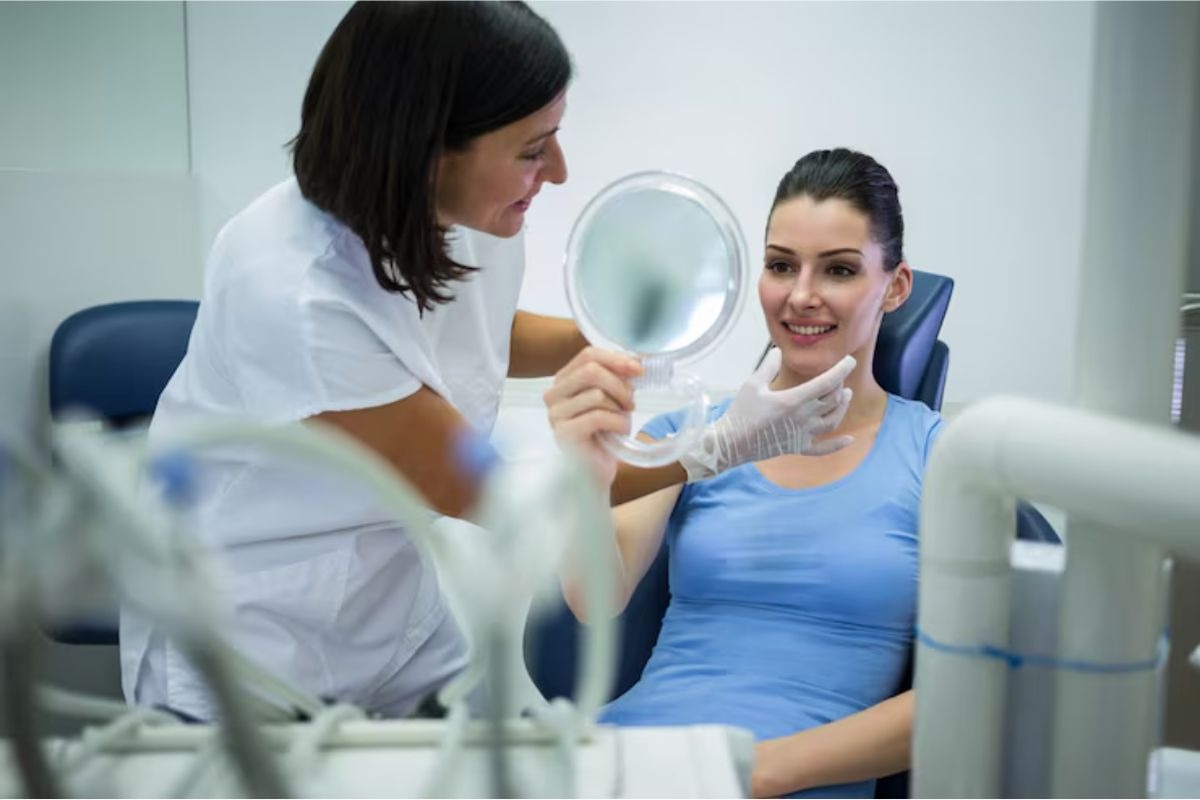
Most people know they should see the dentist regularly, but life gets busy, and appointments get pushed back. The truth is, skipping routine visits has real consequences ones that are not always obvious until a problem becomes serious. Understanding the benefits of routine dental checkups and cleanings is one of the most practical things you can do for your health.
Prevention is always easier, faster, and less expensive than treatment. This guide explains why regular checkups matter and what they actually do for your long-term oral health.
What Happens at a Routine Dental Checkup?
A routine dental checkup is much more than a quick look at your teeth. It is a thorough assessment of your entire oral environment — teeth, gums, jaw, and soft tissue.
A general checkup will involve:
- A cleaning of the teeth to remove any plaque or tartar that may be left from brushing.
- A check over of all the teeth to see if they have any decay, chips or worn spots.
- A gum health assessment, including pocket depth measurements
- X-rays are needed to check between teeth and below the gumline
- An oral cancer screening of the tongue, cheeks, and throat
- A review of any existing dental work, such as fillings or crowns
When patients book dental checkups, they are investing in early detection — and early detection is where the real value lies.
The Real Benefits of Routine Dental Checkups
Understanding how dental checkups help maintain healthy teeth and gums comes down to what happens when you skip them. Problems do not stay small forever. A cavity that is caught early takes minutes to fill. Left alone, it can reach the nerve and require a root canal or destroy enough tooth structure to need a crown or extraction.
The same applies to gum disease. In its earliest stage — called gingivitis — it is completely reversible with a professional cleaning and improved home care. Once it progresses to periodontitis, bone loss begins, and the condition becomes manageable but not curable.
This is how the progression is arrested with frequent checkups before it can get to its final stage.
Gum Health Is More Than a Cosmetic Concern
Many people focus on their teeth and forget about their gums. But gum health is foundational. Your gums hold your teeth in place. When they are inflamed, infected, or receding, the stability of every tooth in your mouth is at risk.
Gum disease is also closely connected to overall health. Research has consistently linked it to cardiovascular disease, diabetes, respiratory conditions, and complications during pregnancy. The mouth is the entry point to the rest of the body—what happens here does not stay here.
A dentist who assesses your gum health at every visit is not just checking your smile. They are looking out for your broader well-being.
Professional Cleaning Does What Brushing Cannot
Even people who brush and floss diligently every day accumulate tartar. Tartar is hardened plaque that calcifies onto the tooth surface and cannot be removed at home—no matter how good your technique or how expensive your toothbrush.
Once tartar builds up, it creates rough surfaces where more bacteria cling and multiply. It irritates the gums and pushes them away from the tooth. Professional cleaning removes all of this and gives your mouth a fresh baseline to work from.
Most patients notice that their mouth feels cleaner, their breath is fresher, and their gums bleed less after a professional cleaning—because the underlying irritant has been removed.
Catching Problems That Have No Symptoms
One of the most important roles of a regular checkup is finding problems that you cannot feel or see.
Many dental conditions are painless in their early stages. A small cavity between teeth. Early bone loss around a molar. The beginning of an abscess. A small lesion on the soft tissue. None of these cause obvious symptoms at first — and yet all of them are far easier to manage when caught early.
A personalized dental solutions that sees you regularly builds a detailed picture of your oral health over time. Your dentist knows your baseline. They can spot changes that would be invisible to someone seeing you for the first time.
X-Rays: Seeing What the Eye Cannot
X-rays are standard in routine dental treatment that many people don’t even think about, showing the following:
- Cavities forming between teeth where the dentist cannot see directly
- Bone levels around the teeth and jaw
- The position and development of wisdom teeth
- The health of tooth roots and surrounding bone
- Any cysts, growths, or abnormalities beneath the surface
X-rays are not taken at every visit — only when clinically indicated. But when they are needed, the information they provide is irreplaceable.
How Often Should You Go?
For most adults, a checkup every six months is the standard recommendation. However, some patients benefit from more frequent visits based on their individual risk profile.
You may need more frequent checkups if you:
- Have a history of frequent cavities
- Are being treated for gum disease
- Have diabetes or another systemic condition that affects oral health
- Are pregnant
- Have a dry mouth due to medication
- Smoke or use tobacco products
Explore our dental office will recommend the right schedule for your specific needs. There is no single interval that fits everyone.
Oral Health Affects the Whole Body
The link between oral health and overall health is well established and continues to grow stronger in medical research.
Germs from inflamed gums may enter your bloodstream and move to the heart, lungs and other parts of the body. Existing systemic inflammatory diseases have been linked to chronic oral inflammation. It is more difficult to control blood glucose in people with active gum disease. People with bad oral hygiene tend to develop respiratory infections.
Taking your dental checkups seriously is not just about your teeth. It is a meaningful part of looking after your whole body.
Your Best Smile Starts With Consistent Care — Visit Foothills Dental Group
Skipping checkups is one of the easiest ways to let small problems become expensive ones. Staying on top of them is one of the simplest things you can do for your long-term health and your budget.
At Foothills Dental Group, the team is dedicated to helping every patient maintain a healthy mouth through thorough, personalized care. Whether you are due for a routine visit or have not been in a while and want to get back on track, book your appointment today. Your smile is worth looking after consistently.
Frequently Asked Questions:
What is the difference between a dental checkup and a cleaning?
A checkup is the examination your dentist assesses the health of your teeth, gums, and soft tissue. A cleaning is performed by a dental hygienist and removes plaque, tartar, and surface staining. Both are typically done at the same appointment.
Are dental checkups necessary if my teeth feel fine?
Yes. Many dental problems including early cavities, gum disease, and oral abnormalities have no symptoms in their early stages. Feeling fine does not mean everything is fine.
How long will a regular checkup last?
Most routine appointments last between 45 minutes and one hour to perform a cleaning and examination. The length of the appointment varies depending on how much calculus is to be removed and whether an X-ray needs to be taken.
What should I do if I have not been to the dentist in several years?
Book an appointment as soon as you can. Your dentist will do a thorough assessment to understand the current state of your oral health and create a plan to address anything that needs attention. There is no judgment — just a focus on getting you back on track.